Categories
Black-Tailed Deer British Columbia Canadian Animals Exploring Vancouver Island

Columbian Black-Tailed Deer at home in my Vancouver Island Neighborhood.

On Vancouver Island, according to the B.C. Ministry of Environment, Conservation and Parks there are 150,000 to 250,000 Columbian Black-tailed deer. These deer are identified by their large mule-like ears, a white rump and an all-black tail.
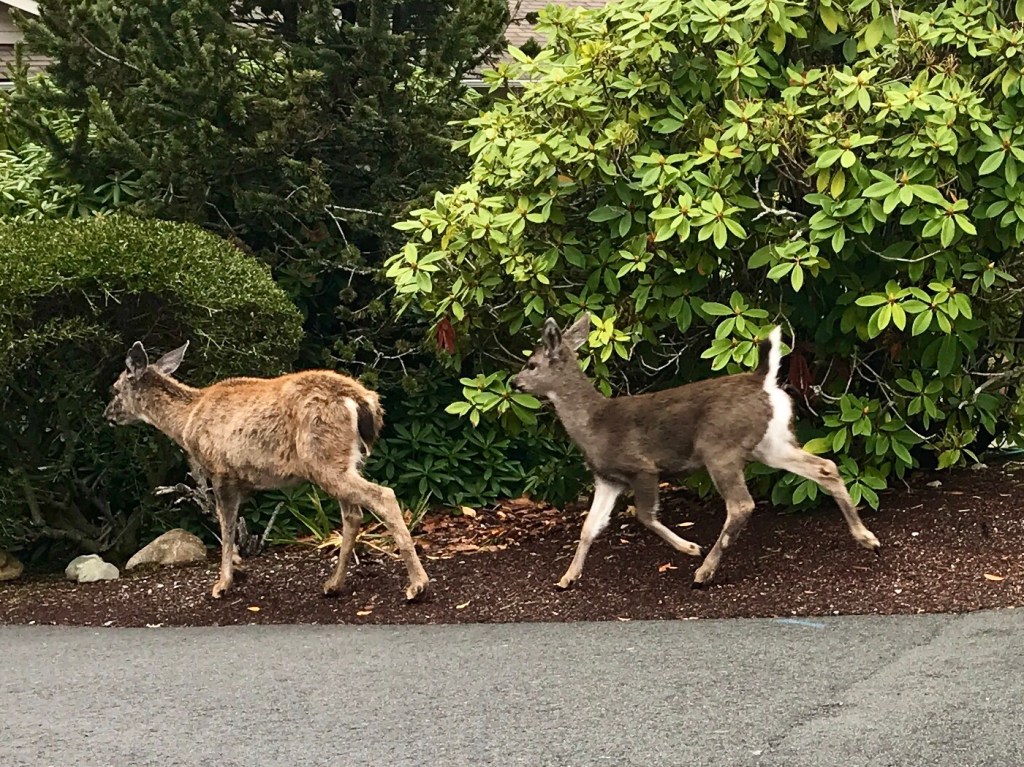
Black-Tailed Deer

The population of Columbian Black-tailed deer (subspecies of the mule deer) fluctuates based on a variety of reasons. This Discover Vancouver Island website contains interesting facts about Black-Tailed Deer from general habits and mating, to their life cycle and food choices. https://www.discovervancouverisland.com/wildlife-on-vancouver-island/black-tailed-deer/

An informal consensus with friends typically divides people’s opinions on our Black-Tailed Deer population into 3 categories: hunters (fresh wild venison), gardeners (annoyed by the foliage consumed by deer), and nature lovers (adore watching the deer and encourage their presence).

Sophia (our cat) watching the Deer family grazing in the front yard.

I must confess, our household has evolved into a combination of the 3 categories. Although we do not hunt, a gift of lean wild venison is a delicacy we greatly appreciate.
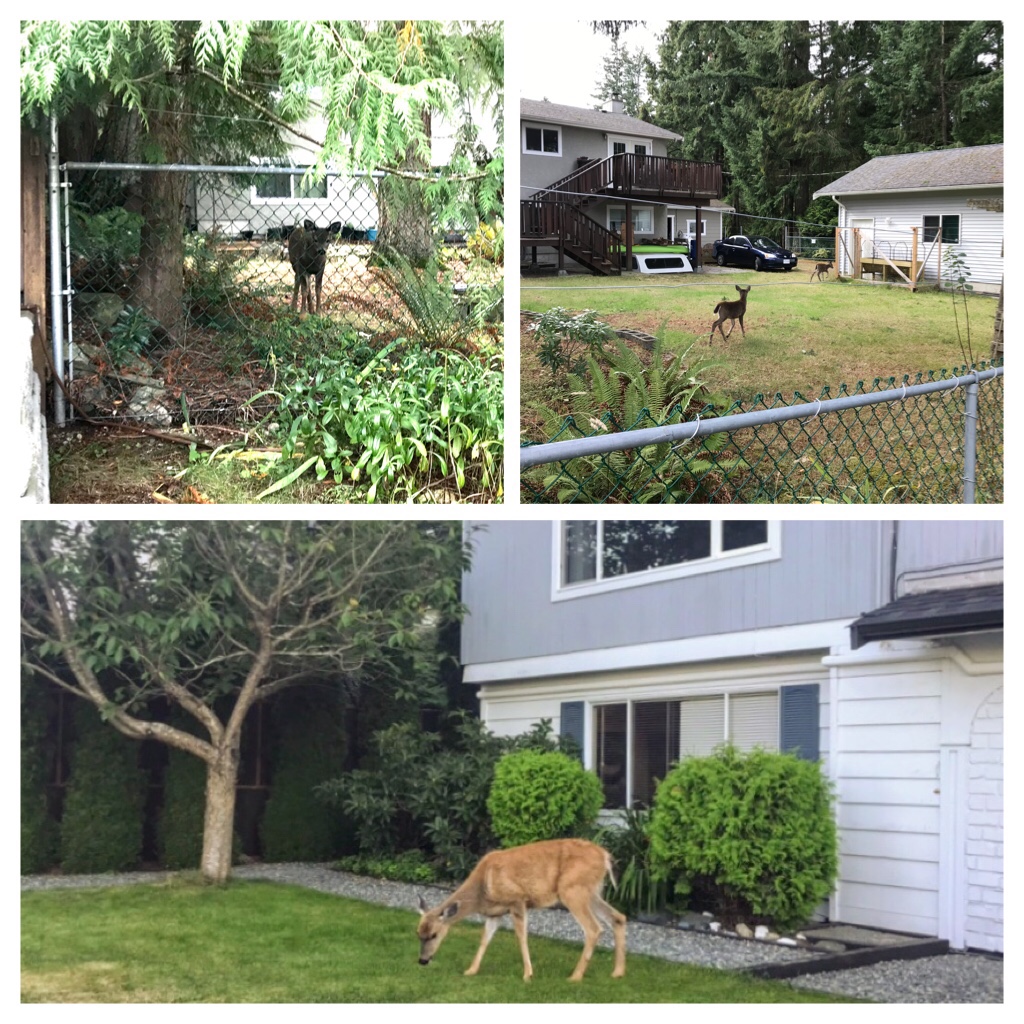
Fenced backyard… open to graze in the front yard

Our backyard is fully fenced in order to keep the deer out. They quickly consume fresh veggies, flowers, and new growth on plants. However, our front yard is free territory for deer to graze and wander or relax.

As the seasons rotate, we find ourselves curious about the upcoming new fawns and look forward to observing the deer family behaviors and interactions.
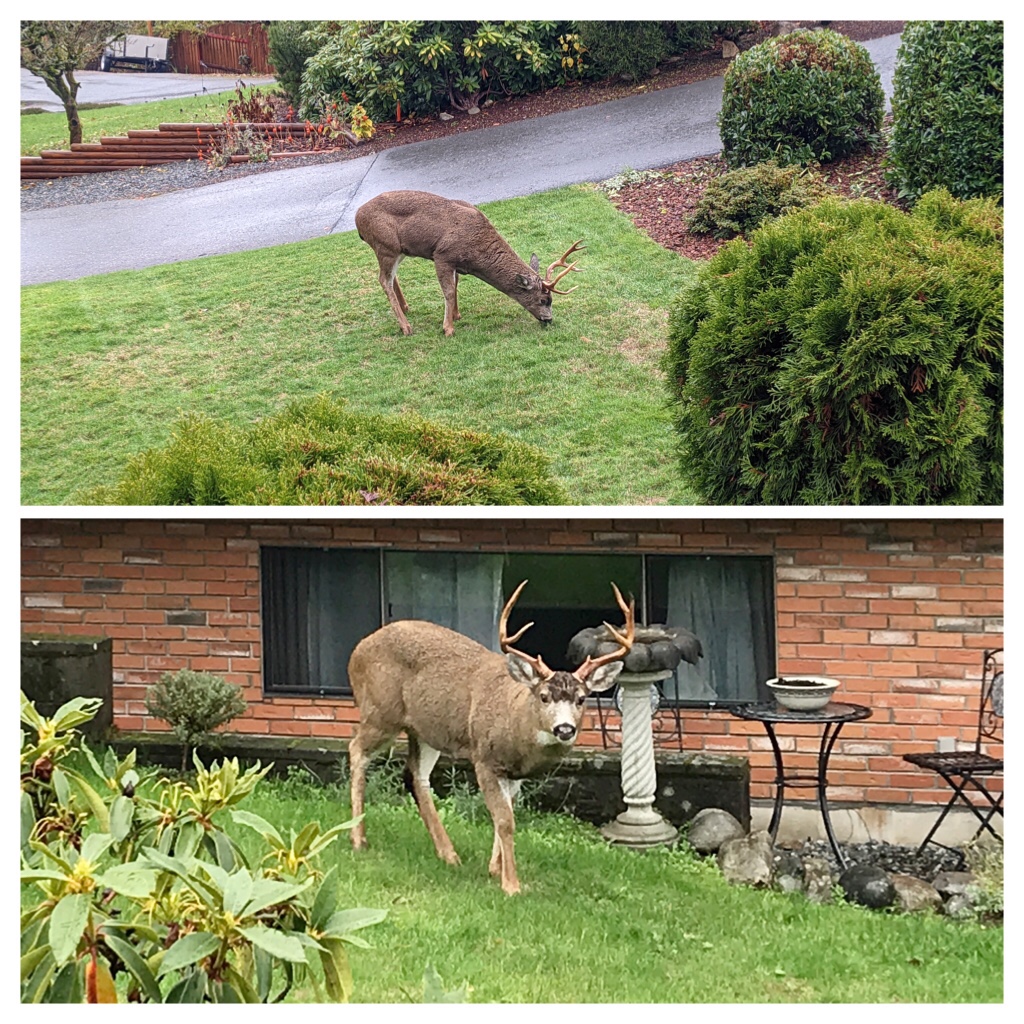
Rutting/mating Season! This big buck suddenly started showing up and chasing the does!

At present… It is November (Autumn in Canada). To our Black-Tailed deer this means it is rutting/mating season! We can hear the Bucks (males) crashing their antlers together as they fight to establish dominance!
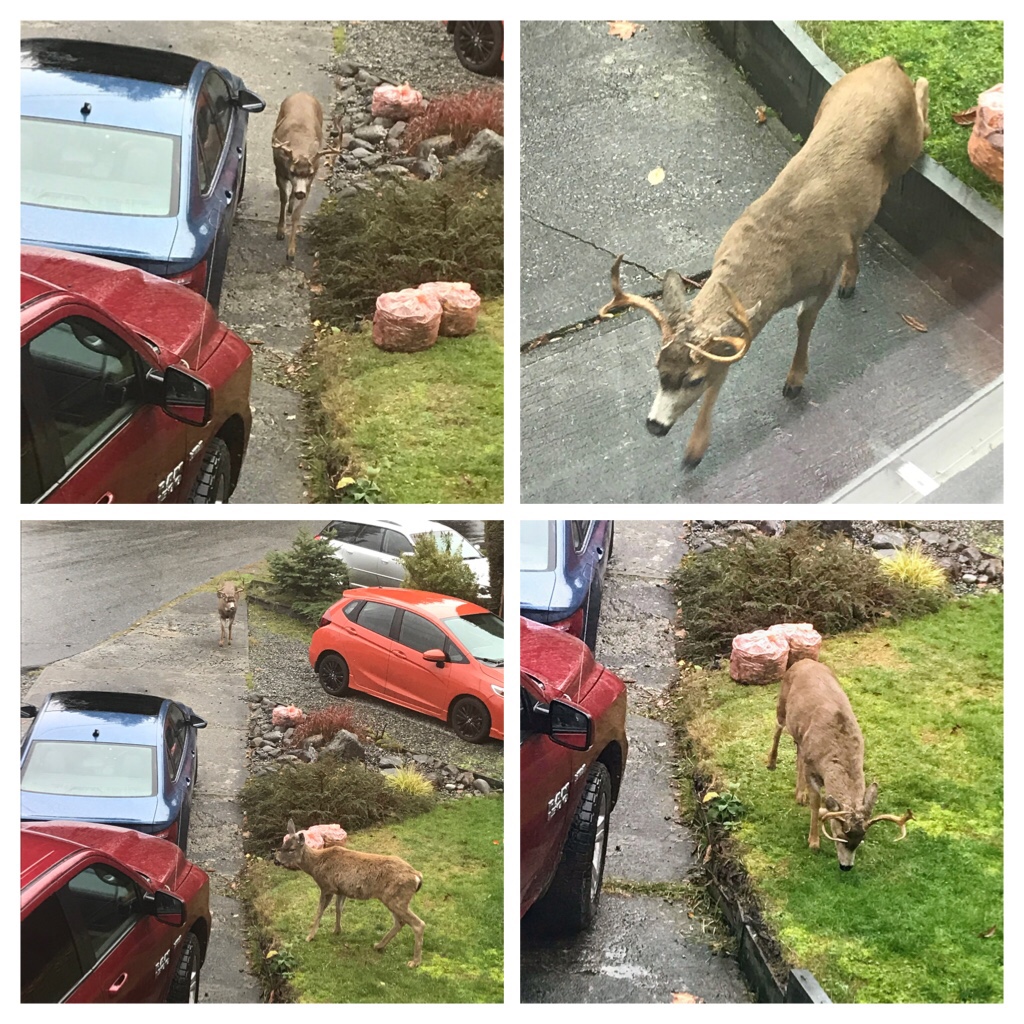
Another big buck recently appeared… The doe started running away when she saw him heading her direction–right beside our vehicles!

We observe the Does (females) pushing away their 1 1/2 year old sons. It’s time to leave mom’s company and become independent. The does will be in heat soon and inbreeding is not encouraged!
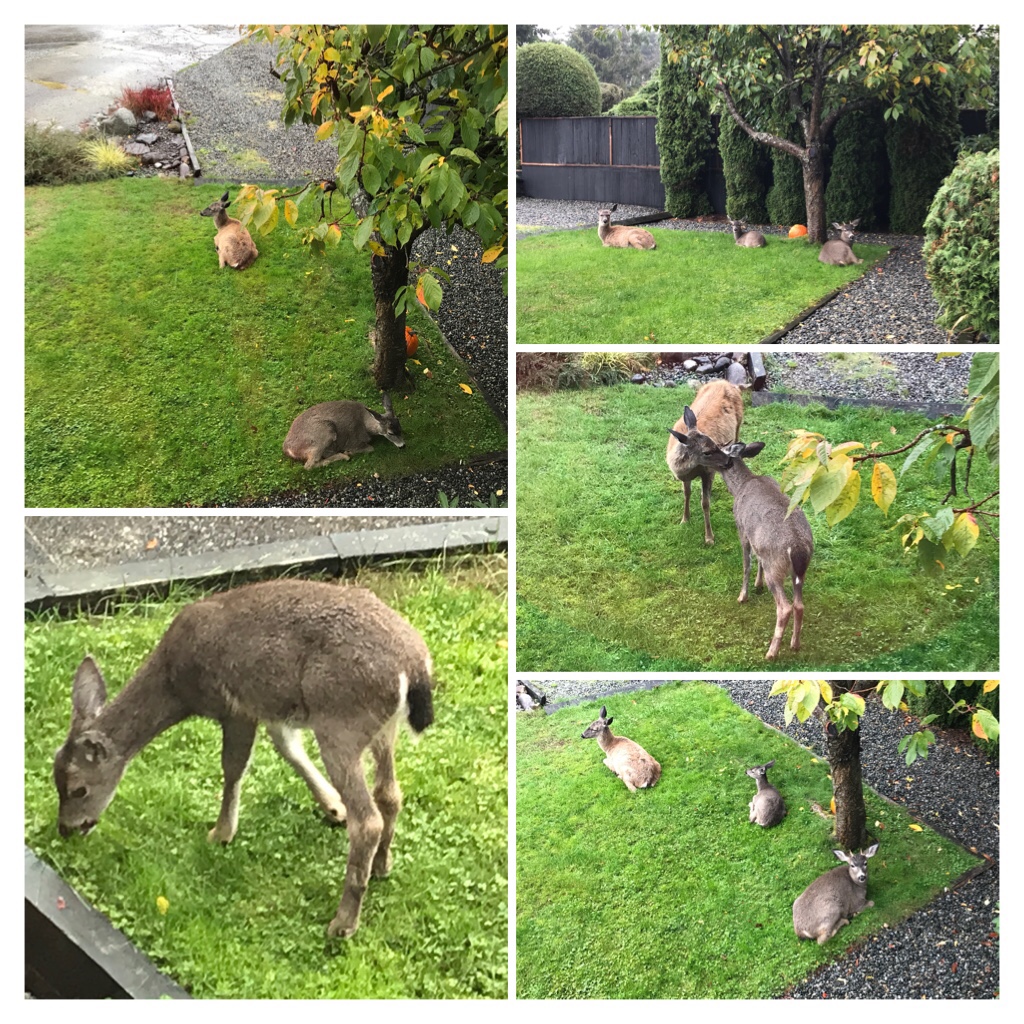
This was a family unit that frequented our yard until this past month. Momma doe is now being chased by big bucks. This year’s fawn remains with her. Last year’s fawn (buck) now has spike antlers and momma has chased him off to be independent.

By late October … Spike was not included when momma doe and this year’s fawn wandered through our yard to munch on newly fallen leaves and grass. The fawn seemed to enjoy resting on top of the autumn leaves.
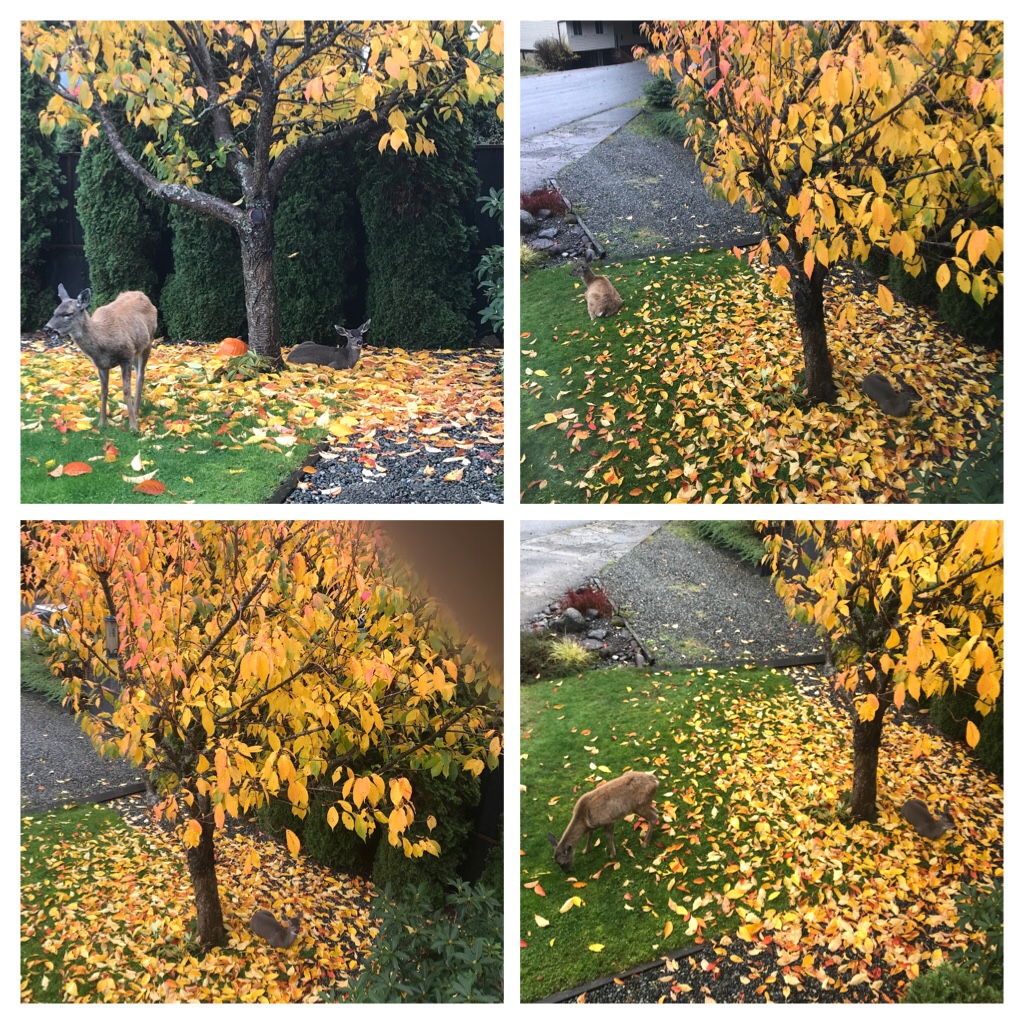
Late October…. Spike was no longer part of the family unit.

Dominant bucks suddenly appear during daylight hours to mate and chase does. The bucks remain by the doe’s side for several days while she is in heat.

Bucks remaining by doe’s side during her estrus period.

Reflecting back to September and October, the deer family units were still intact in our neighborhood. Momma doe had been injured on her back leg and she continues to lick the wound regularly and struggle to walk. This year’s fawn is usually close beside her and rarely wanders out of her sight. Last year’s fawn has grown into a healthy young buck and is now sprouting spikes on his forehead!
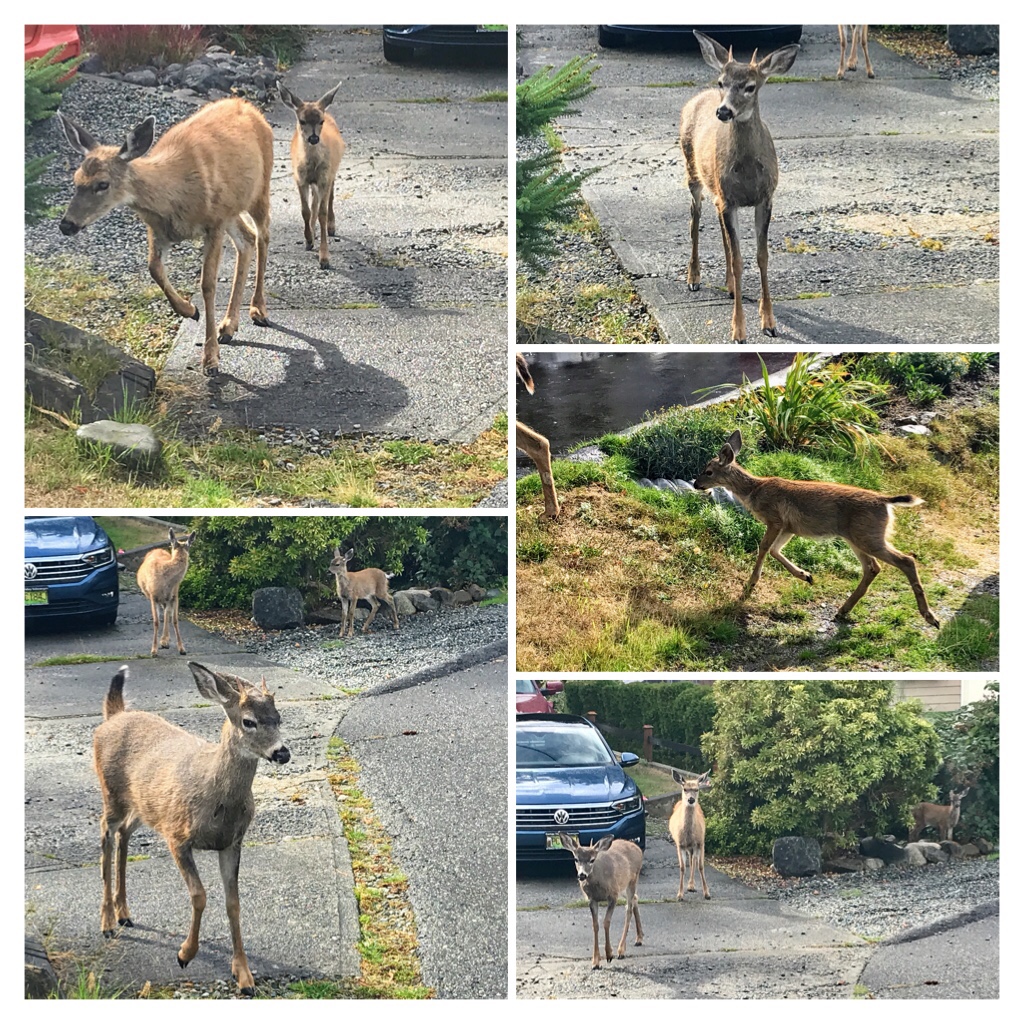
Our usual deer family—including Spike!

Our cat, Sophia, continues to be fascinated by the deer family–mainly the youngest fawn. They watch each other from a distance, and naughty Sophia even sits on the roof of the vehicles to increase her safety and view.

Sophia and the fawn playing in our yard.

Sophia watching the action from a distance!
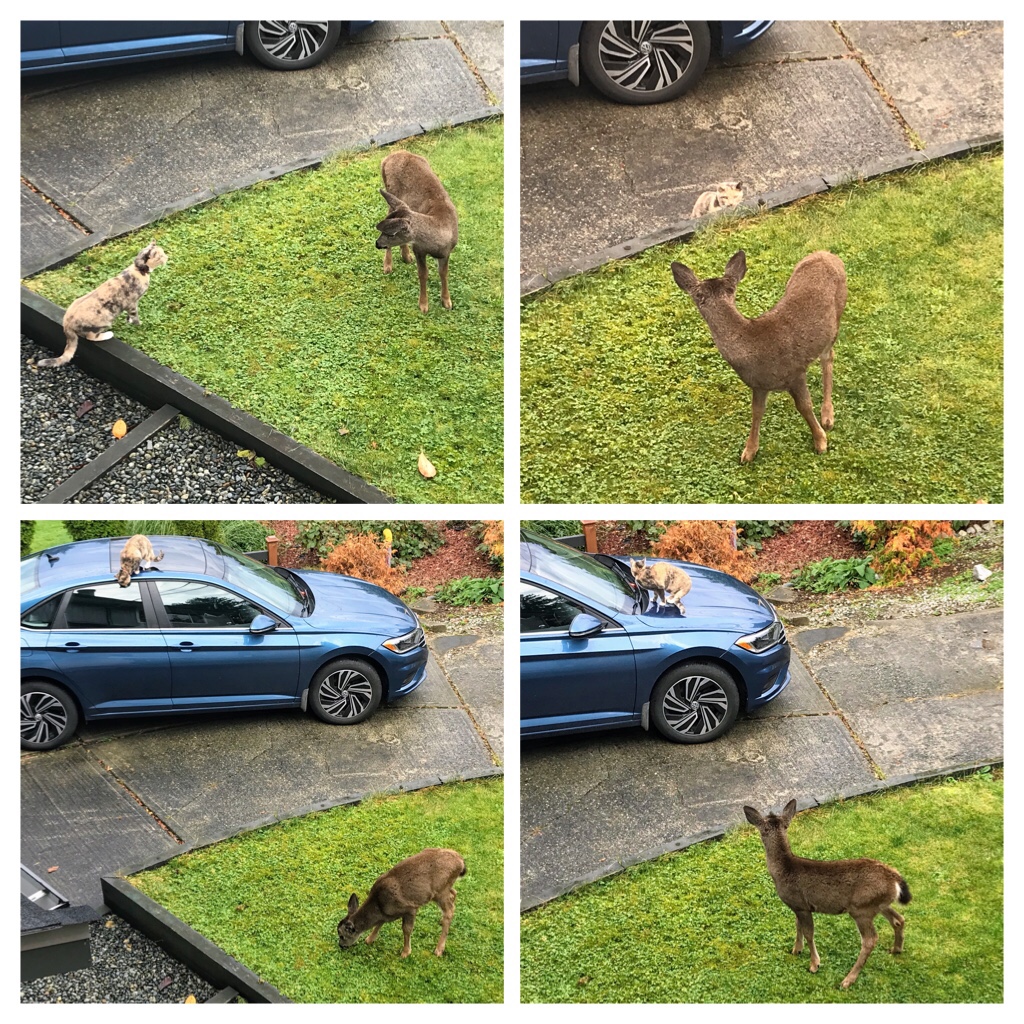
Sophia and the fawn! October 2021

Once a doe falls pregnant, the gestation period is nearly 7 months long.
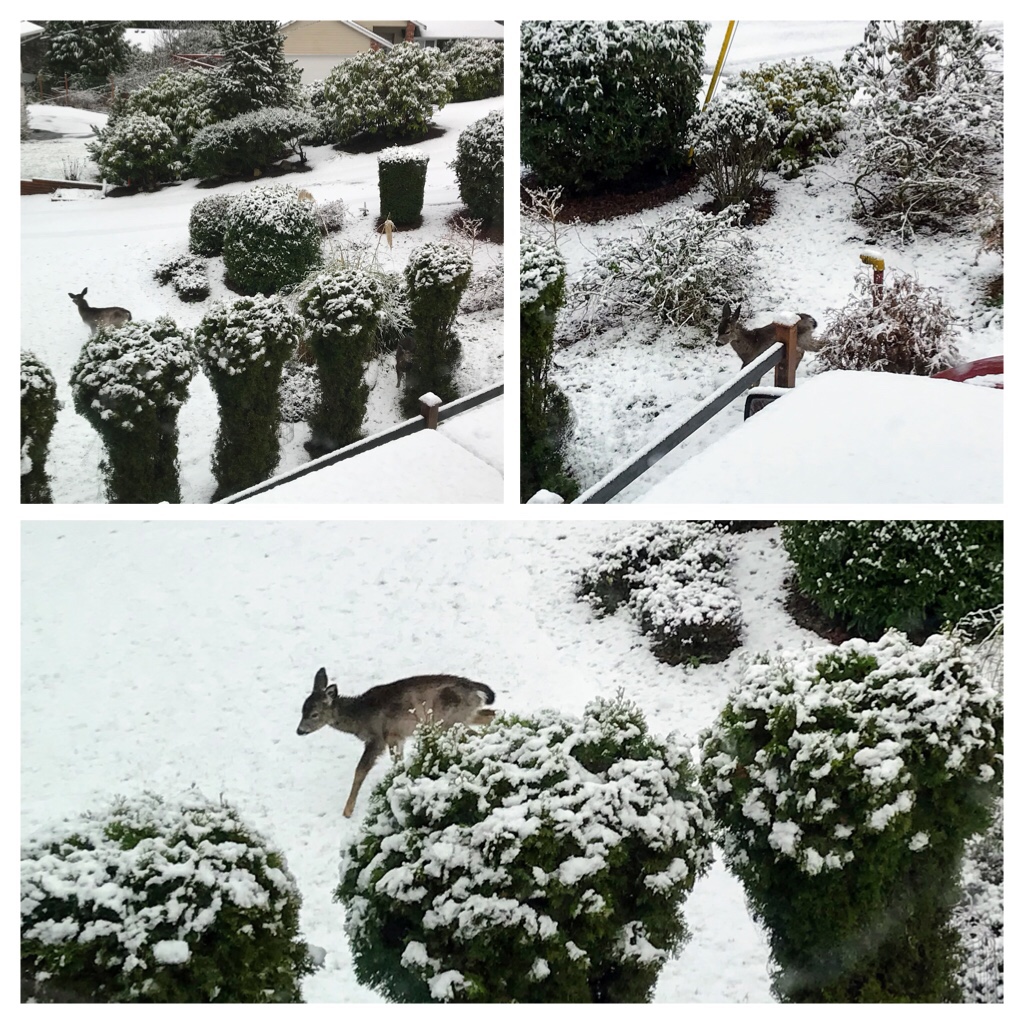
We don’t see our urban deer as often during the winter months

During the winter the deer cope with the colder temperatures by hiding under foliage and growing thick coats.

Momma and last season’s twins

Last March a momma doe and her twin fawns popped by to graze in our yard.
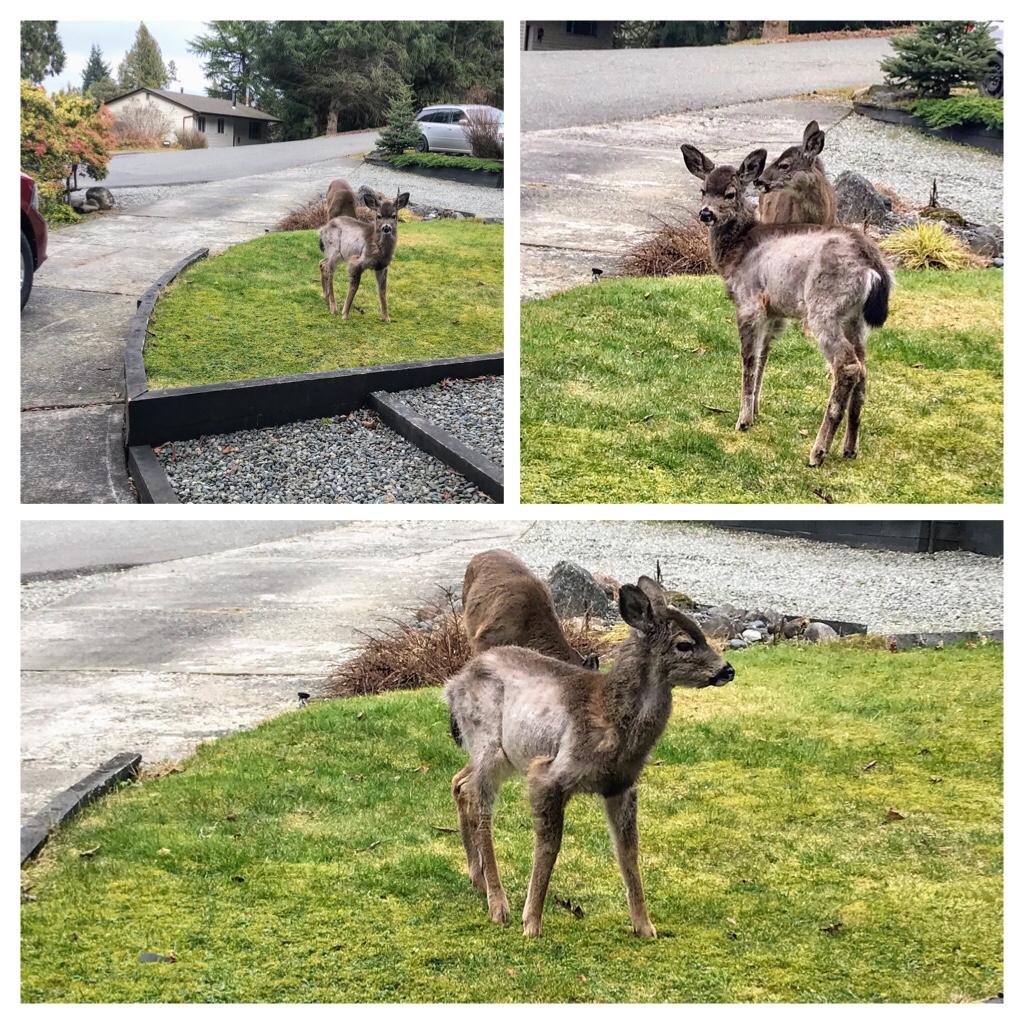
The deer are in the process of shedding their thick winter coats! (March)

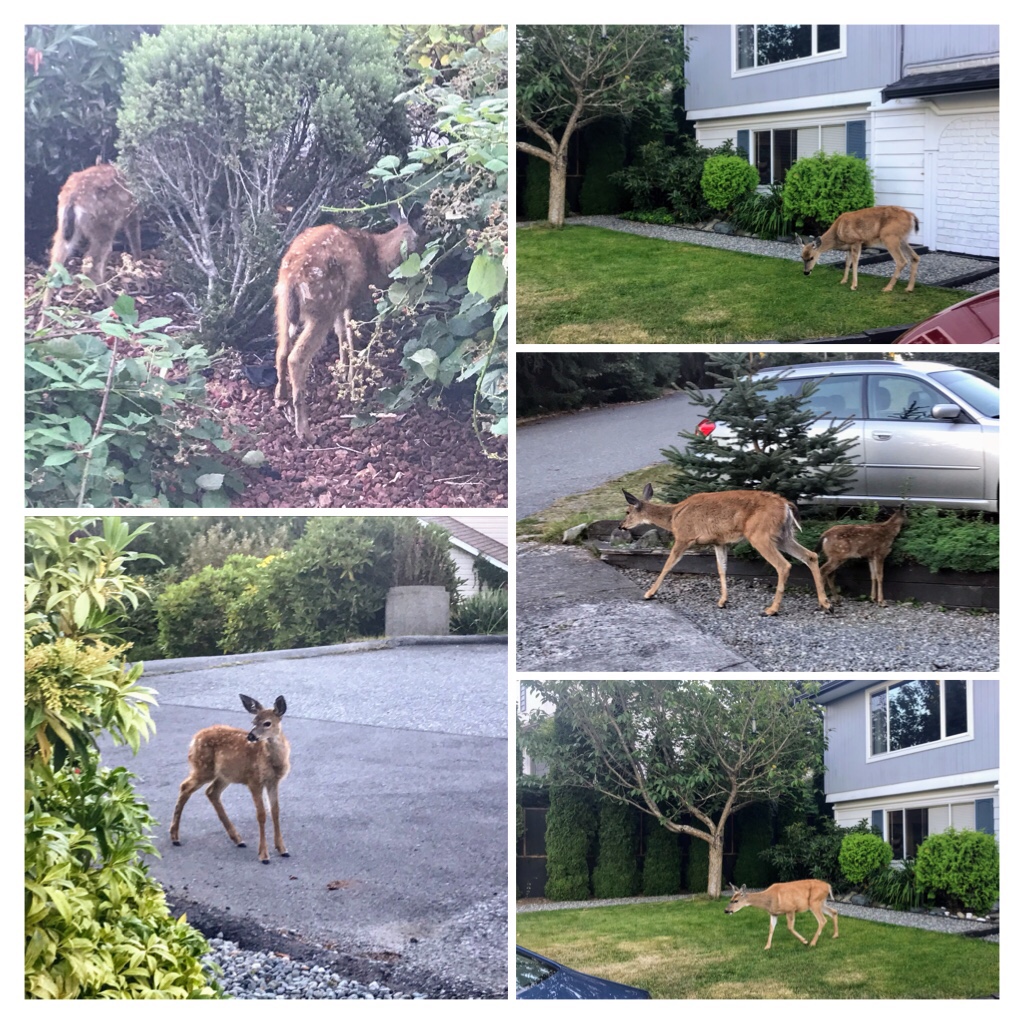
The majority of fawns are born during May/June in our area. Twins are common, but young does sometimes only produce one fawn.

The new spotted fawns finally venture out to visit! Summer

On Vancouver Island, the major predators for black-tailed deer are: humans, wolves, cougars, and occasionally Black or Grizzly bears. Lynxes and wolverines are additional threats on the coastal mainland of British Columbia, but do not exist on Vancouver Island.

A new threat is making the news in the past year. AHD (Adenovirus Hemorrhagic Disease), is a contagious virus killing black-tailed deer on Vancouver Island and the surrounding Gulf Islands in B.C.

Apparently, the disease is only found in deer populations and spreads mainly through nose-to-nose contact. Information is accumulating about AHD on many veterinarian and hunting websites.

Here is a September 30th 2021 Chek TV News article about this disease . https://www.cheknews.ca/deadly-virus-killing-hundreds-of-deer-is-spreading-on-vancouver-island-891862/
Dedicated to our neighbourhood Pacific Northwest Black-tailed deer.

We are entranced by our urban black-tailed deer families and look forward to observing visits each day. Keep safe and keep healthy my cervidae friends. Winter is coming!

Upcoming posts will be about antics of Sophia and more hiking adventures on Vancouver Island.

Keep Safe and Keep Optimistic. S
Categories
British Columbia Exploring Outdoors Exploring Vancouver Island Hiking trails Nature Remembrance Day

Autumn Hikes. Exploring the Rainforest around Nanoose Bay, Vancouver Island!

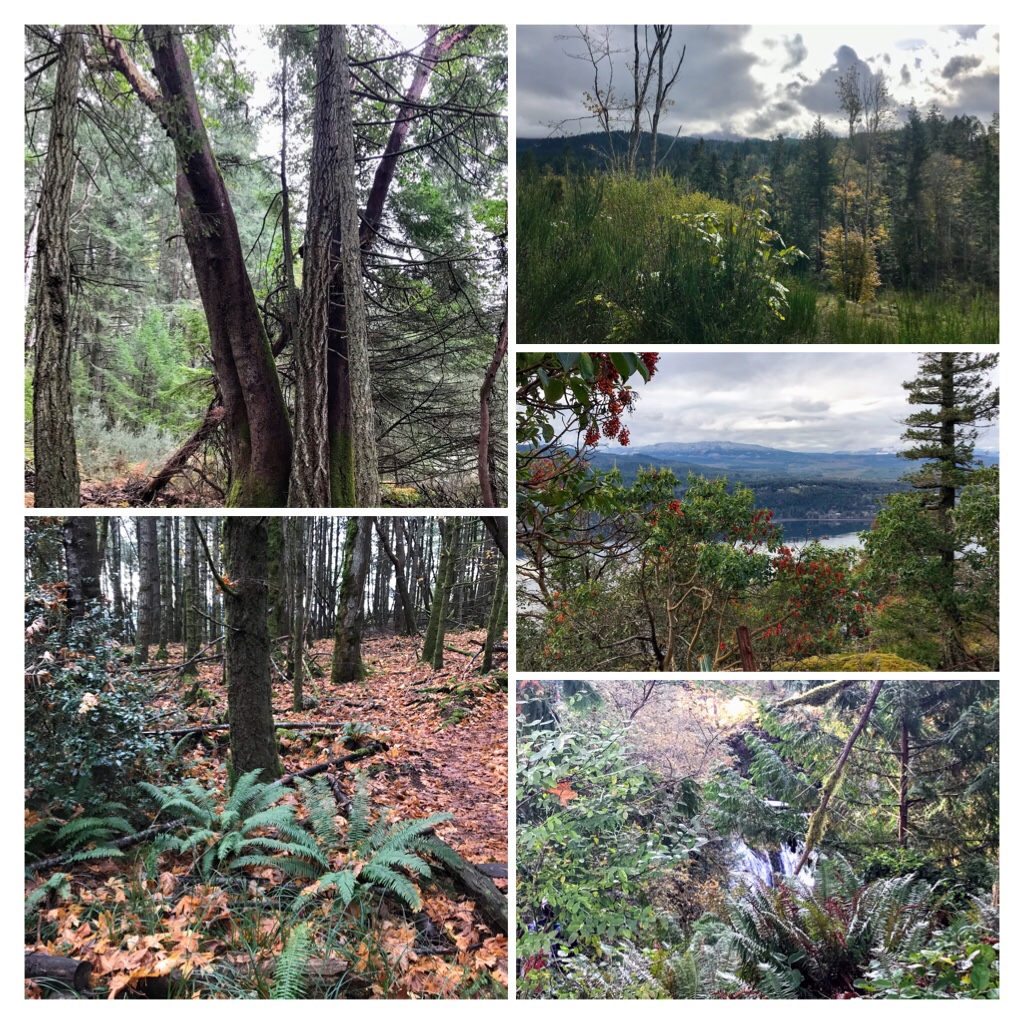
Vancouver Island is a nature lovers’ paradise. If you love to be outdoors and explore nature, there are endless possibilities around our beautiful Canadian island. This blog post discusses day hiking options around Nanoose Bay, British Columbia.

Colorful autumn hikes around Nanoose, BC.

If you commence your hiking trips from Nanaimo, Nanoose Bay is approximately 30 km or about 30 minutes drive northwest via the Island Highway 19 N (North).

Popular hiking trails at Nanoose Bay include: Enos Lake Trail, Notch Hill Park, Notch Hill Loop Trail and Bonnell Creek Falls. It is easy to search for information about hiking trails in this area, but a source recommended by many local hikers is https://www.alltrails.com/canada/british-columbia/nanoose

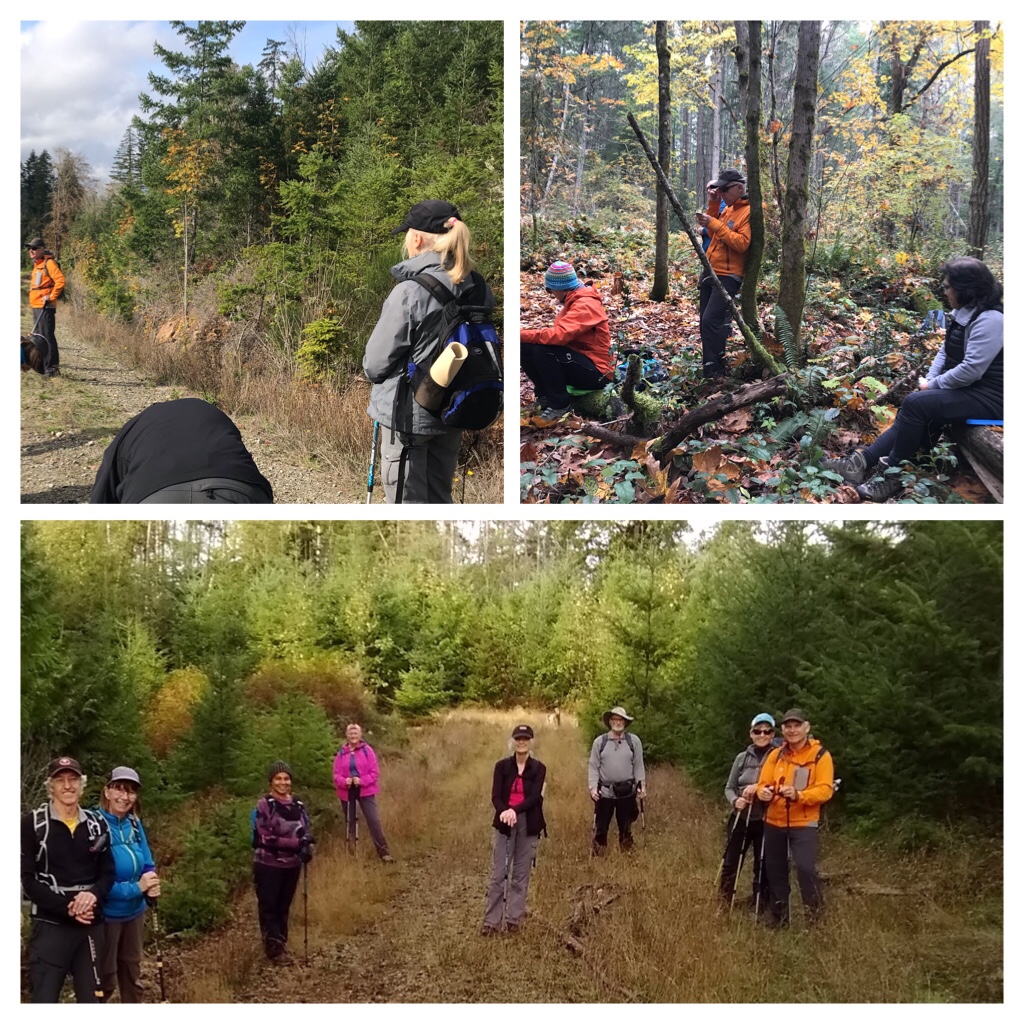
Due to reaching herd immunity (over 85% of people over 12 are now fully vaccinated against Covid 19 in my Canadian province of British Columbia), hiking groups are now allowed to explore once again! We are all covid careful and everyone has to show their covid vaccine QRCode passport in order to join the group.

Covid style hiking groups

Let’s go hiking!!!!

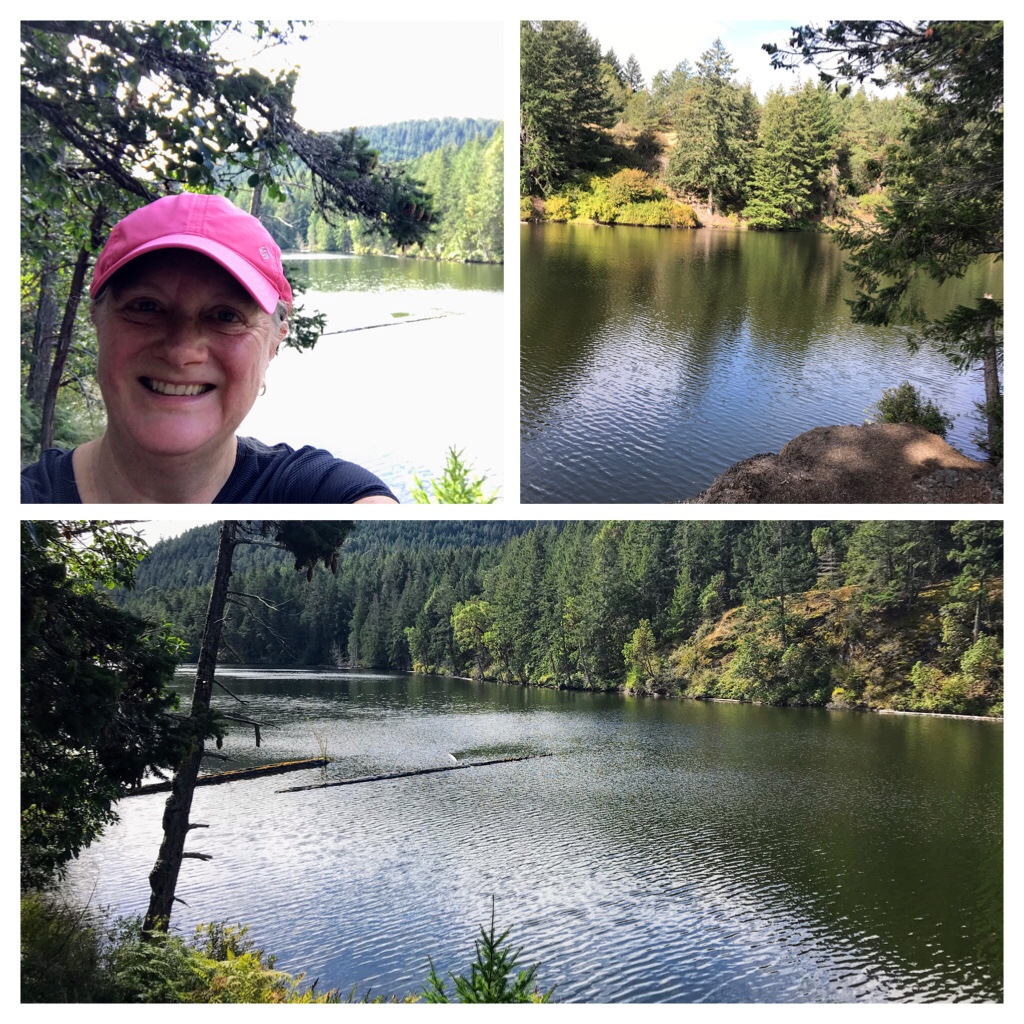
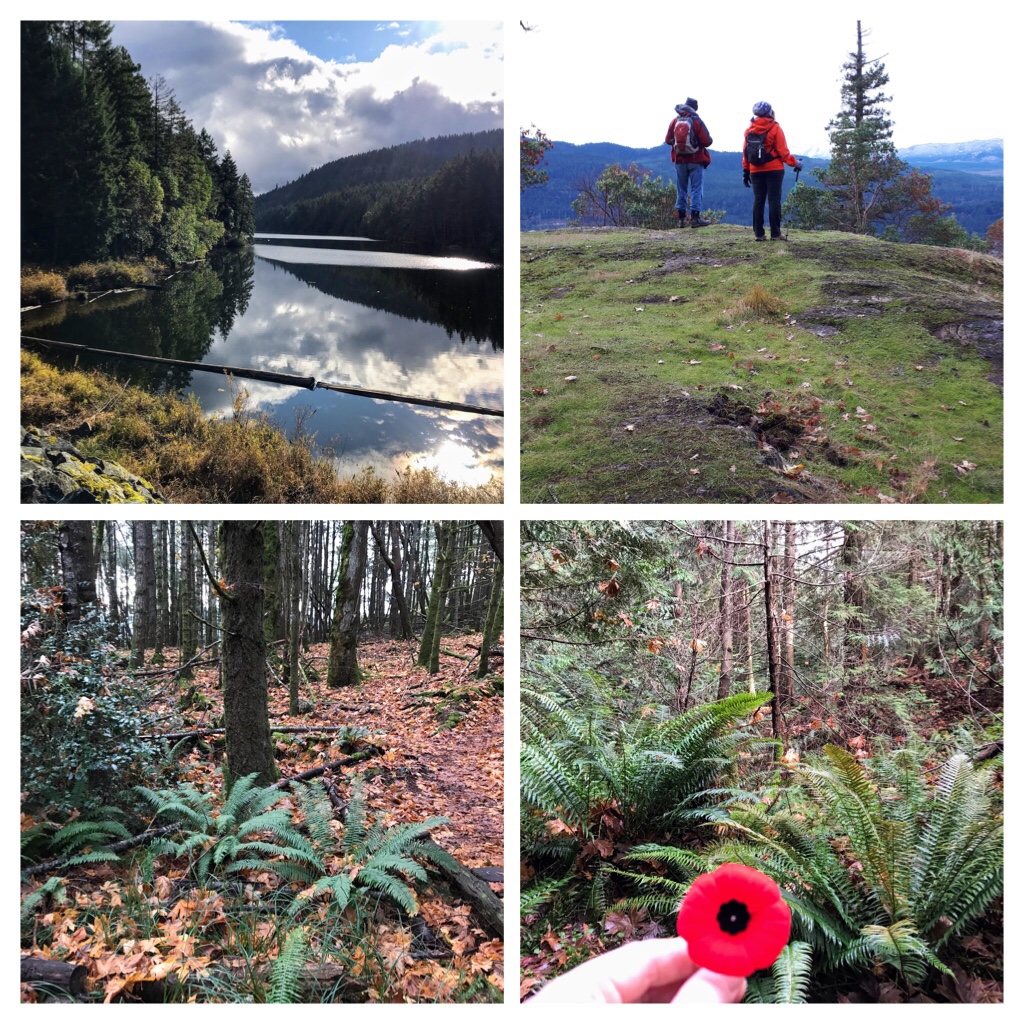
This is Enos Lake hike in September. The weather was sunny and warm. The deciduous trees were only starting to change colours. This is a gorgeous lake hike with many trails to explore.

Enos Lake, Nanoose Bay

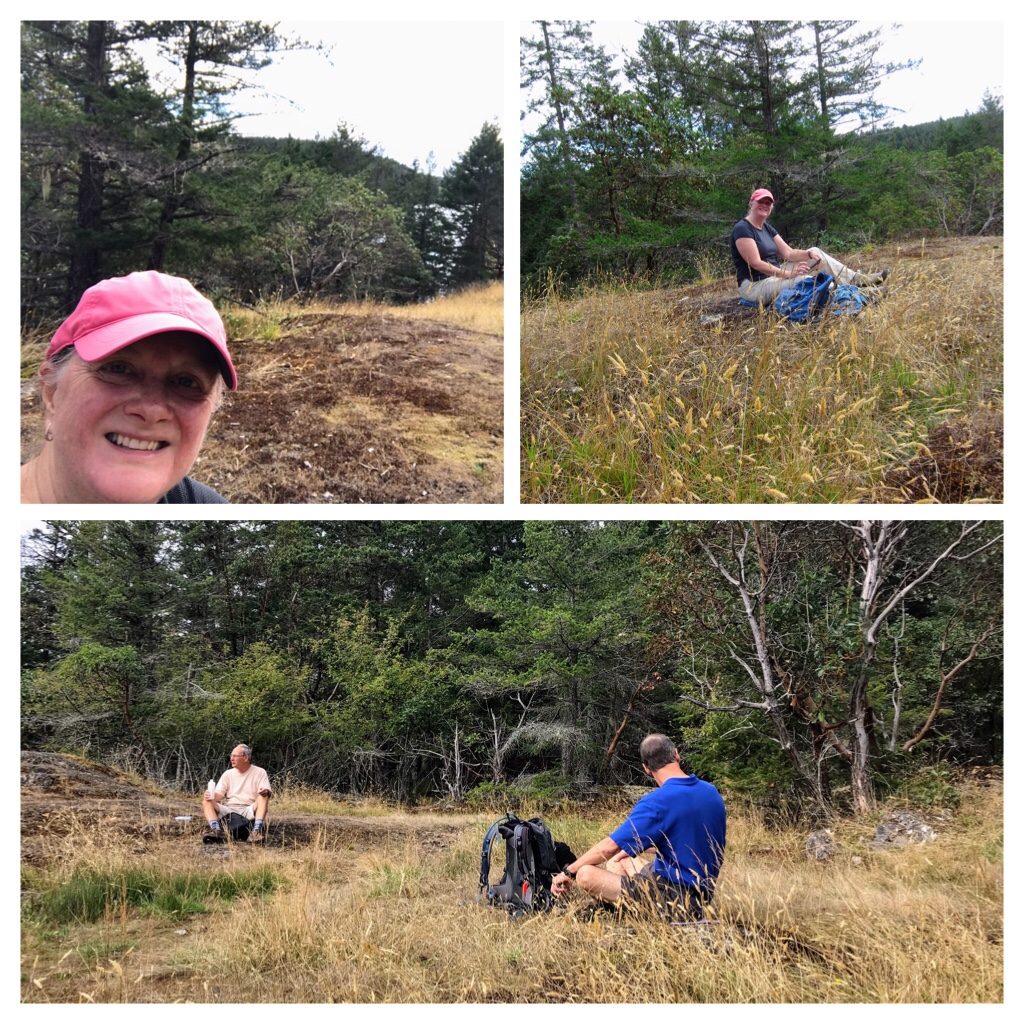
We stopped to have a break and eat a snack on a grassy spot up the hillside above the lake.

Hiking break at Enos Lake Park trail

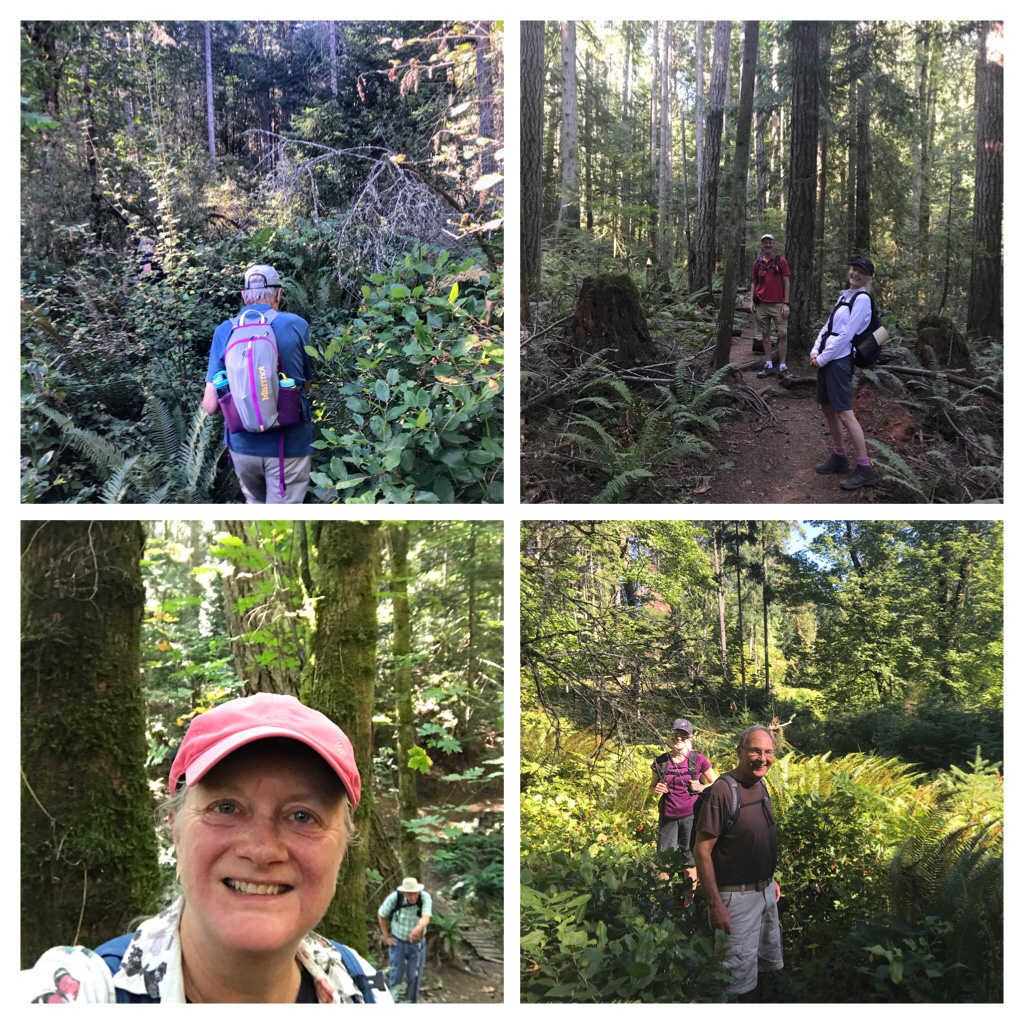
A week later, our hiking group explored trails closer to the Lantzville side of Nanoose Bay. It was another sunny September day. We did not require jackets or toques yet.

Lantzville area hike in September

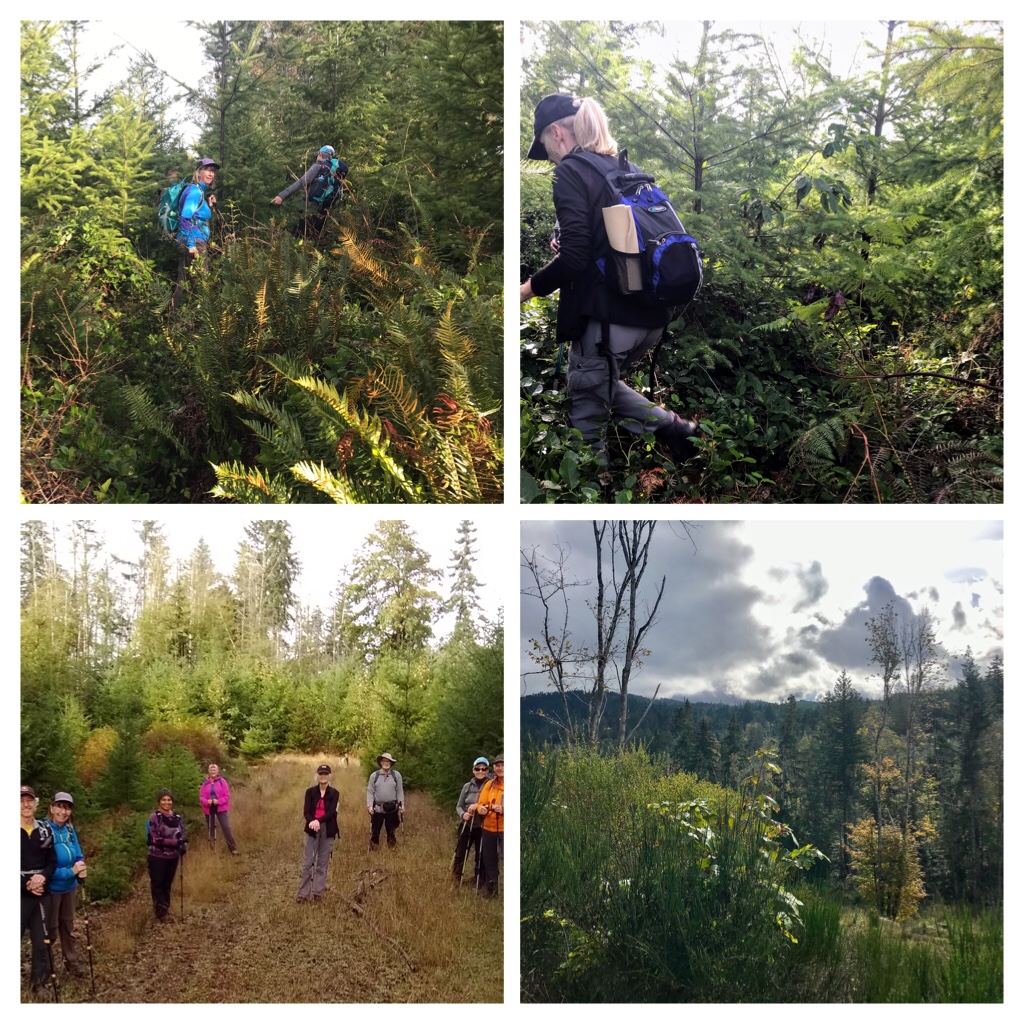
The trees along the trails were regal and the rainforest undergrowth was so thick in places that we had to create new paths!

Breaking paths on hike near Lantzville

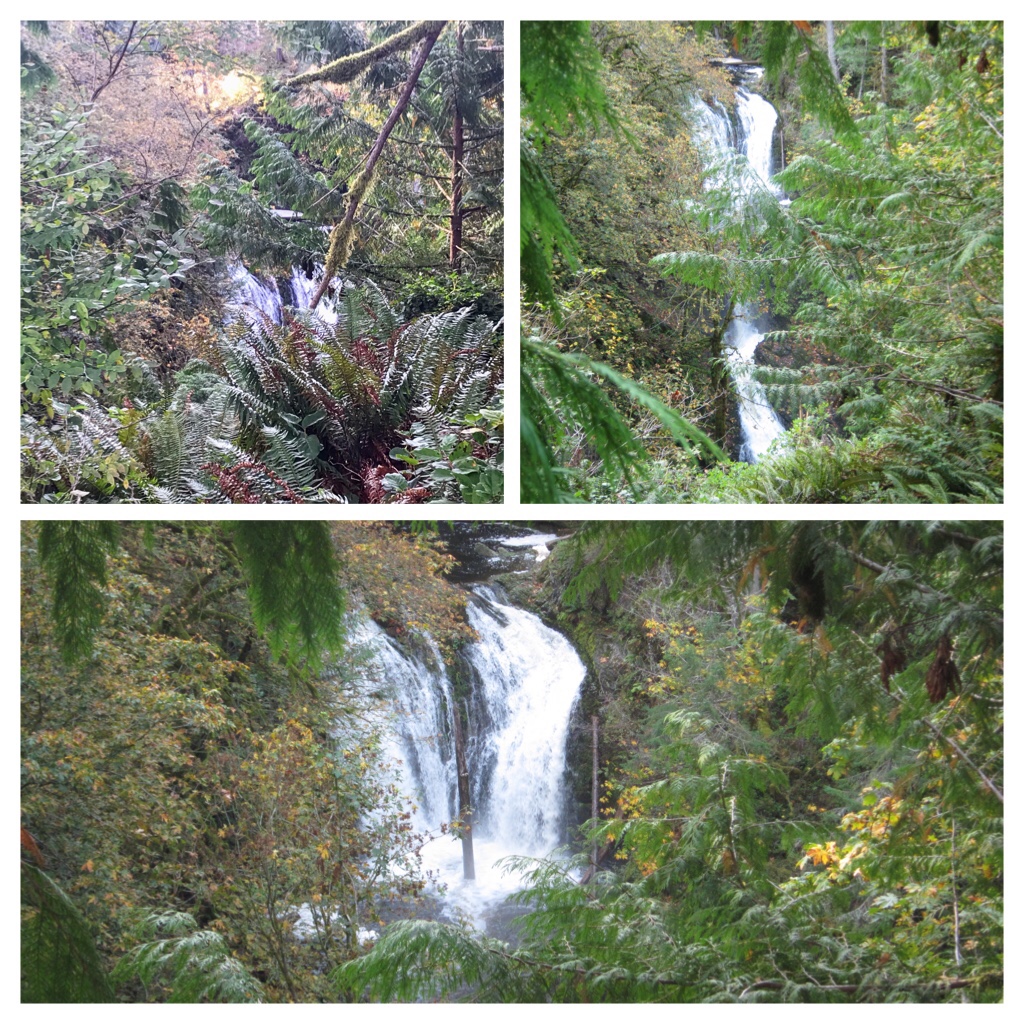
As the weather started changing into normal Autumn patterns, the winds and rains increased causing more trail obstruction damage from tree windfalls and slippery trails. The water levels in the creeks and rivers also increased.

Bonnell Creek Falls, Nanoose Bay in October

Our hiking rain jackets and pants were getting used more regularly now as were 1 or both hiking poles during our adventures. This next hike occurred at Bonnell Creek Falls in mid October.

Creating new paths through underbrush at Bonnell Creek Falls area

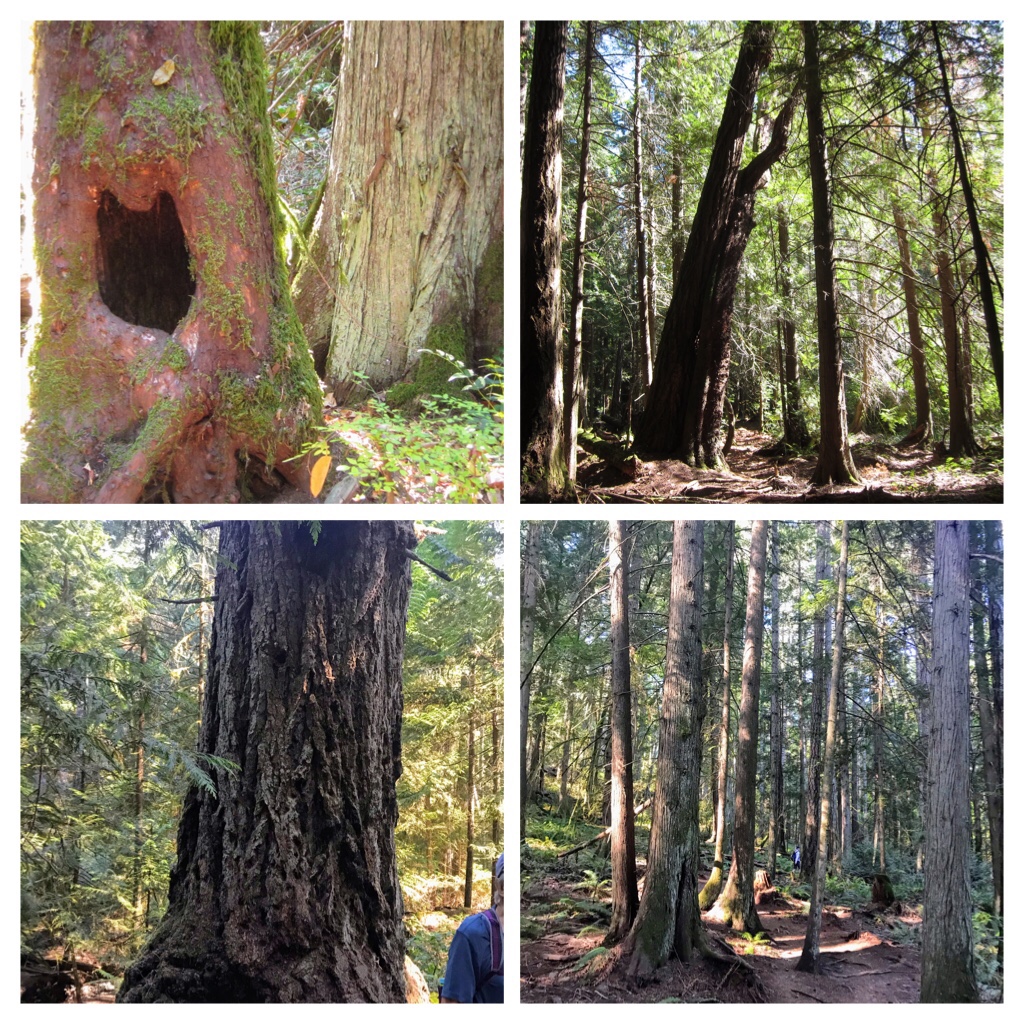
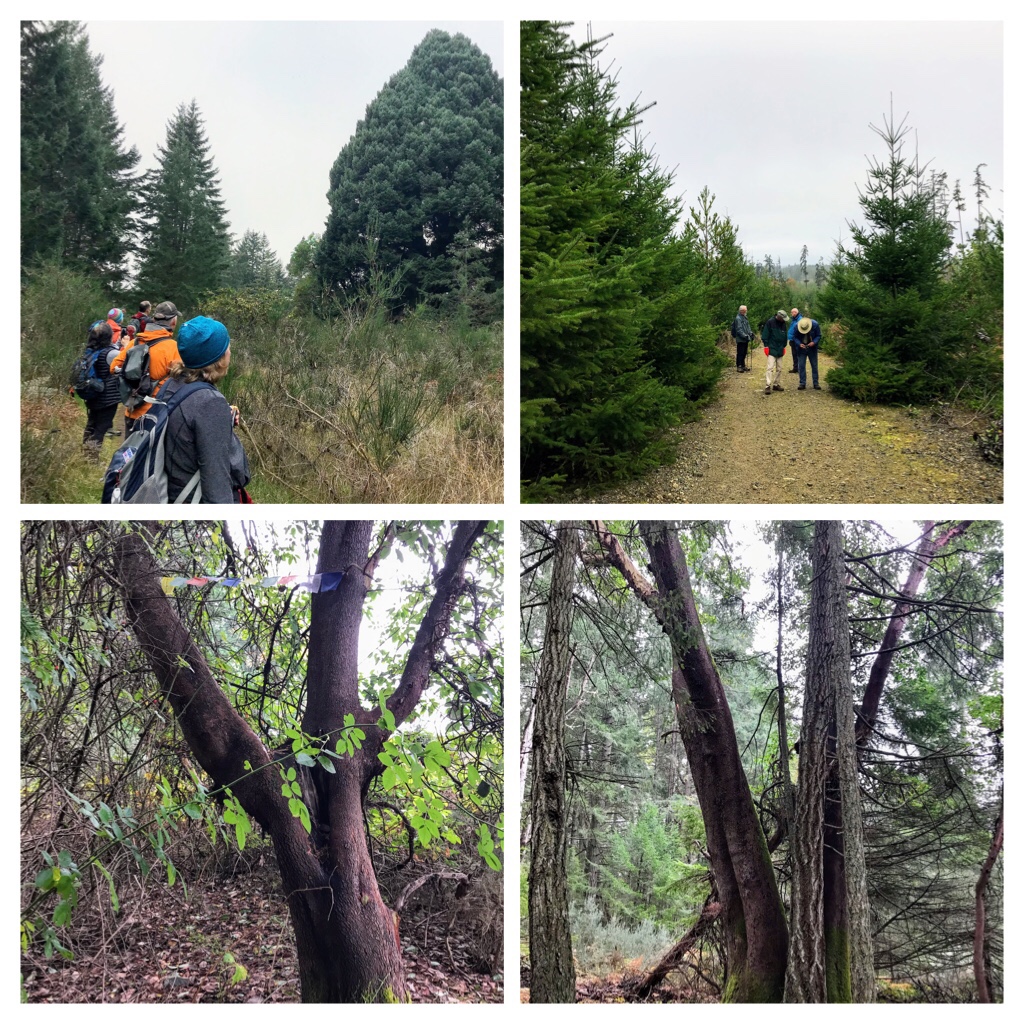
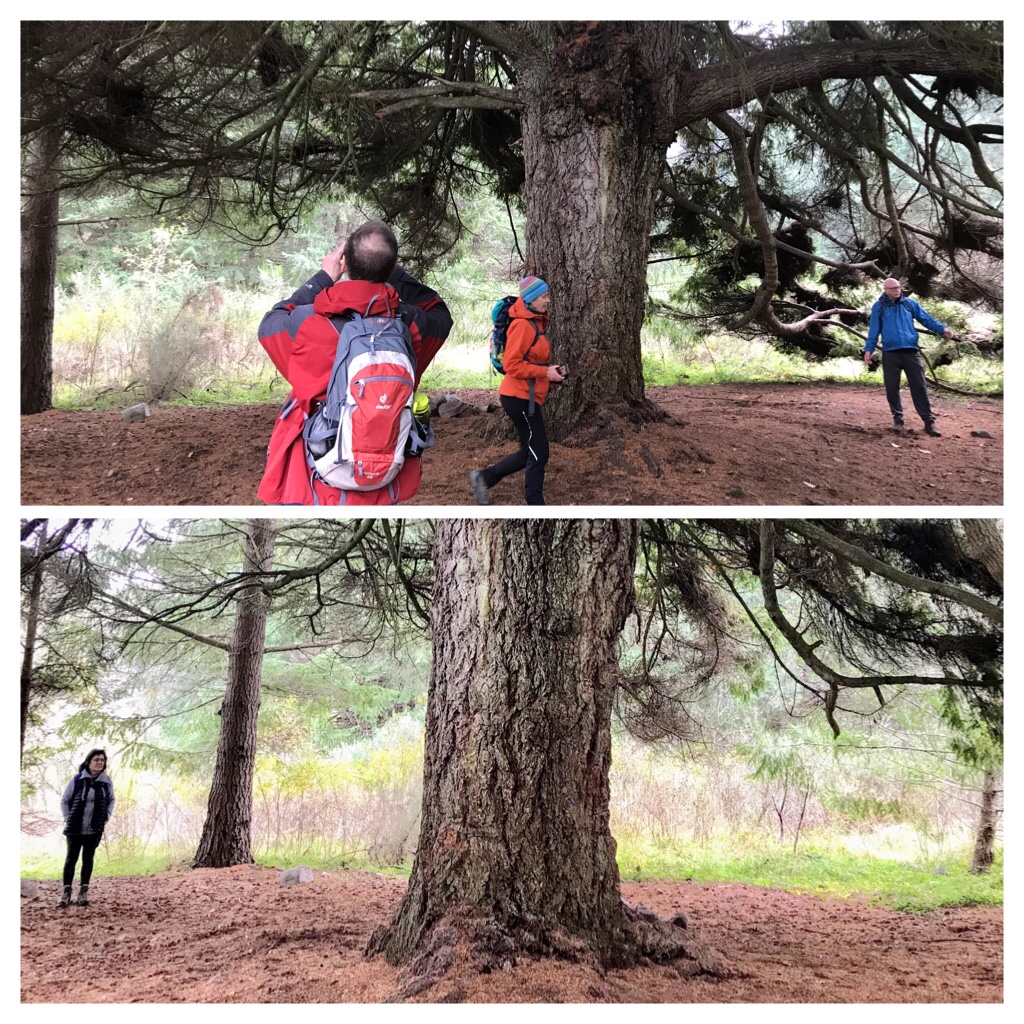
Another great hike in the Nanoose Bay area is “Big Trees” trail. This hike occurred in late October.

Big Trees Trail

We discovered some enormous Arbutus and an enormous Evergreen.

“Big Arbutus Tree”. Our hiking leader posed to illustrate the size of this Arbutus tree.

There truly were “Big Trees” to discover!

Another “Big Coniferous Tree” we discovered.

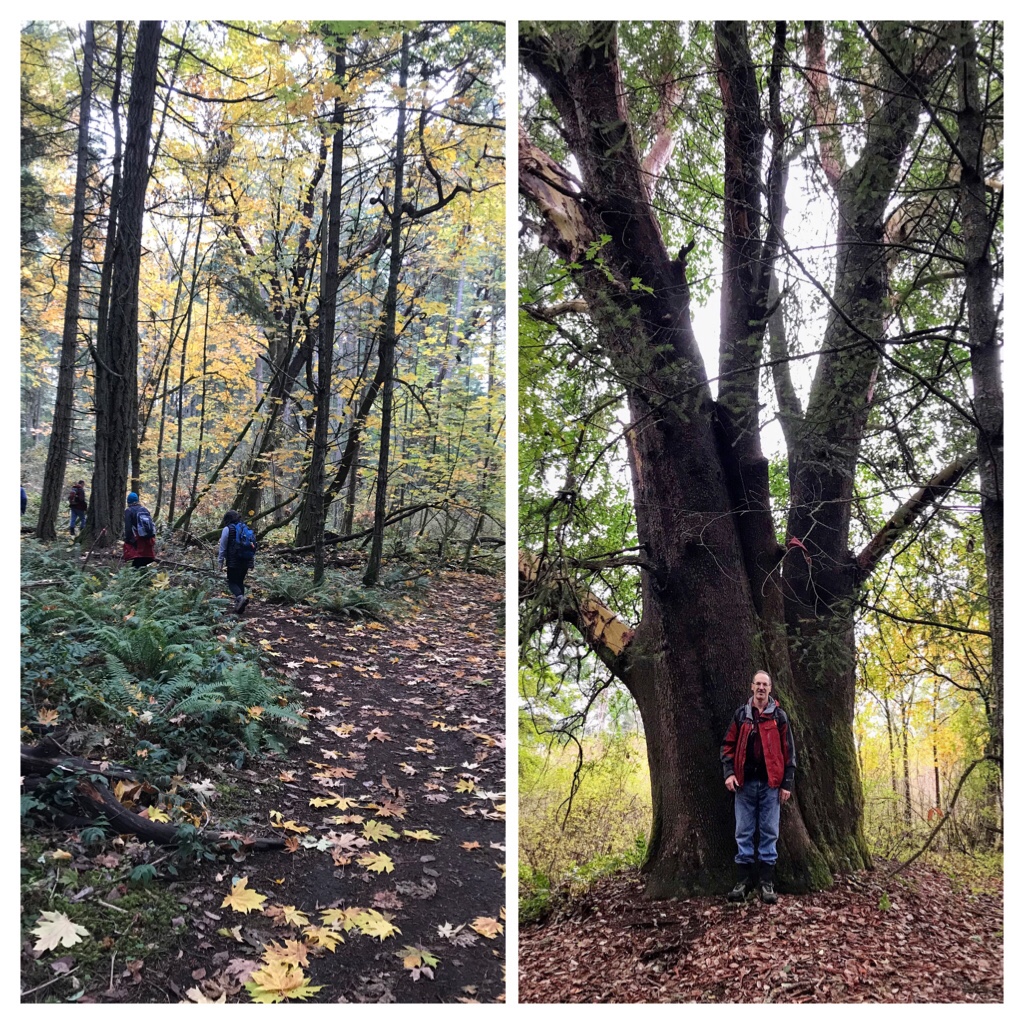
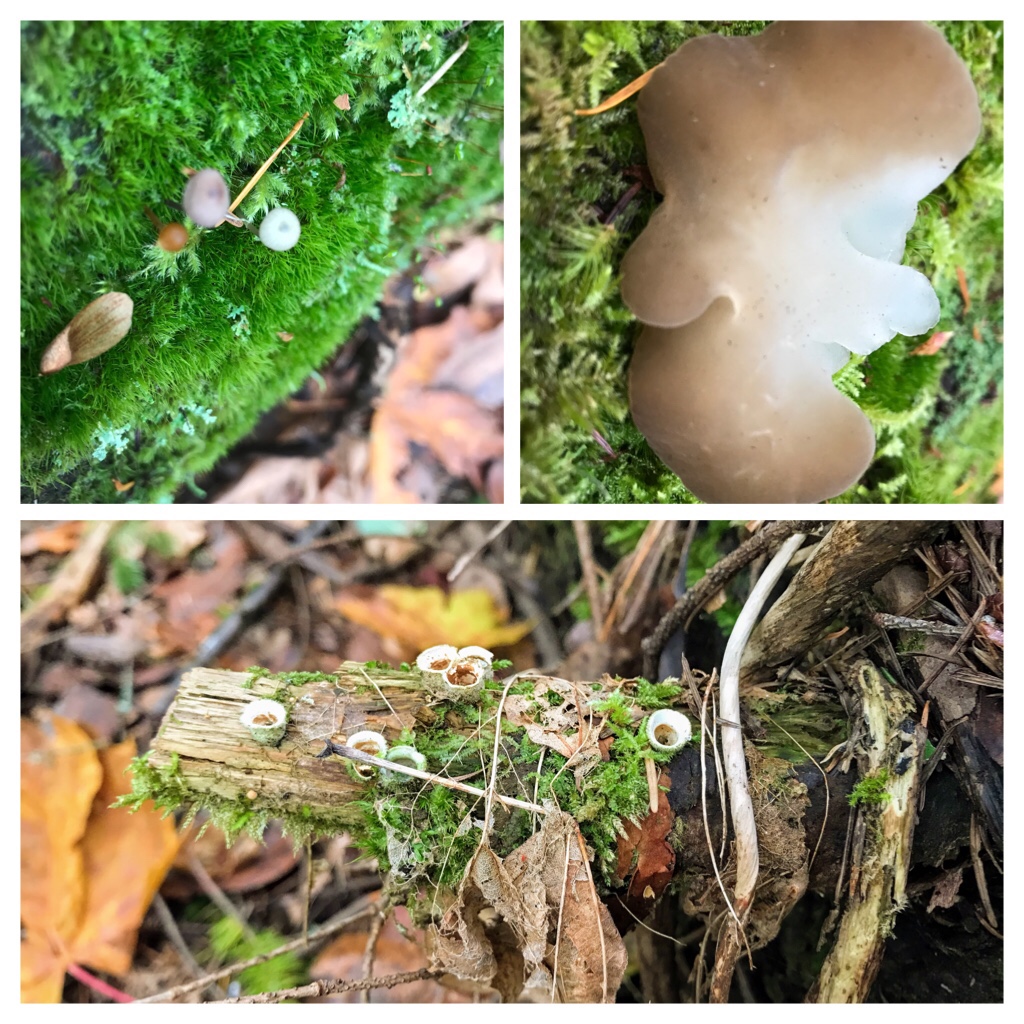
The rains and winds had assisted in dislodging most of the Maple tree leaves around the trails. Although the deciduous trees looked rather bare, the colorful leaves and variety of fungi were enchanting.

COVID Careful Hiking. Break time at Big Trees trail.

A musical Canadian experience in Autumn, is the sound of leaves rustling around your feet as you walk or hike along through the abundant variety of nature trails.

Fascinating diversity of fungi in late October.

Last year on November 11th, our group explored around Enos lake and upward to the “Notch“.

November 11th 2020 hike around Enos Lake and upward to the Notch

At 11:00 a.m. we stopped in a quiet location in the forest beside a river. We all respected 2 minutes of silence to reflect on our freedom in Canada, our goal for peace, and our gratitude for those soldiers and personnel who fought to ensure our freedom. Following the silence, we had an opportunity to share a personal vignette of how Remembrance Day is significant to our families. It was an extremely powerful and sentimental experience.

Here is a video presentation of our November 11th (Remembrance Day) Hike at Enos Lake and up to the “Notch”.

https://videopress.com/v/eoJj8sre?resizeToParent=true&cover=true&preloadContent=metadata
Remembrance Day Hike in Nanoose Bay

Remembrance Day 2021 will soon be here. I will be wearing my poppy and reflecting with deepest gratitude on the past; embracing the freedom we have living in Canada; and hoping for global compassion and peace.

My next blog posts will be about more amazing hiking experiences on Vancouver Island and possibly an update on our Rescue Cat Sophia and our neighborhood deer families.

Keep safe and Keep optimistic. S